
What’s the Difference Between Dentures and Partial Dentures?
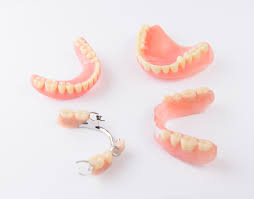
The main distinction in dentures vs partial dentures comes down to how many teeth you’re replacing. Full dentures are designed for patients who have lost all their natural teeth on the upper arch, lower arch, or both. They rest directly on your gums and restore both appearance and function when no natural teeth remain.
Partial dentures, on the other hand, work alongside your existing teeth. If you still have several healthy teeth, partials fill the gaps while using your natural teeth as anchor points. They typically feature a metal or plastic framework that clips into place, keeping everything stable without requiring the removal of teeth that are still doing their job.
Here’s a quick breakdown:
- Full dentures: Replace all teeth on an arch, ideal when most or all teeth are missing or beyond repair.
- Partial dentures: Fill specific gaps while preserving your remaining natural teeth.
- Custom fit: Both options are tailored to your mouth’s unique structure.
Neither option is inherently better. It depends entirely on your oral health, how many teeth you’ve lost, and what feels right for your lifestyle.
When Should You Choose Full Dentures?
Full dentures make sense if you’re dealing with widespread tooth loss or damage. Maybe you’ve been managing dental problems for years, and extraction is the best path forward. Or perhaps you’ve already lost most of your teeth and want to restore your ability to chew, speak, and smile without worrying about gaps.
Patients often choose complete dentures when they’re looking for a fresh start. If your remaining teeth are unstable, painful, or causing ongoing problems, replacing them all can actually simplify your life. You’ll skip the constant appointments and uncertainty, and instead focus on adjusting to a reliable, functional smile.
When Partial Dentures Are the Better Option
If you still have healthy teeth that can support a restoration, partial dentures let you keep what’s working while filling in the rest. Partials prevent your remaining teeth from shifting out of place, which can happen when gaps are left untreated. They also preserve your natural bite, so you’re not starting from scratch.
Partials are a practical choice when:
- You’ve lost a few teeth due to injury, decay, or extraction.
- Your remaining teeth are strong enough to act as anchors.
- You want to avoid removing teeth that are still functional.
Some patients even use a combination approach—full dentures on one arch and partials on the other, depending on what each area needs.
How the Process Works at Mark’s Dentures Lab
Getting fitted for dentures or partials doesn’t have to be stressful. At Mark’s Dentures Lab, the process is built around making things easier for you. It starts with a consultation where Dr. Frick evaluates your mouth, discusses your goals, and uses digital scans to capture precise measurements. No messy impressions, no guesswork.
From there, the design phase begins using advanced software that creates a custom plan based on your unique bite and gumline. The fabrication process uses precision milling to craft your dentures or partials with accuracy, which means fewer adjustments and a better fit from the start. Once everything is ready, you’ll come in for a fitting where the team makes any final tweaks to ensure comfort and function.
After you’ve had a chance to wear your new teeth for a bit, there’s a follow-up appointment to check in and make sure everything still feels right. The team at Mark’s Dentures Lab keeps you informed at every stage, so you always know what’s coming next. You can see the full range of restorative dentistry services offered, or explore other dental services that might support your overall oral health.
Adjusting to Life with Dentures or Partials
It takes time to get used to wearing dentures or partials, but most patients adjust within a few weeks. You might notice some minor soreness at first, or feel like your speech sounds different. That’s completely normal. As your mouth adapts, eating and talking become second nature again.
Caring for your dentures or partials is straightforward. You’ll remove them nightly, clean them with a soft brush and denture cleaner, and store them in water or a soaking solution. Regular checkups help ensure they continue fitting well, especially as your gums change shape over time. With proper care, most dentures and partials last between 5 and 10 years.
What About Cost and Financing?
Cost is a common concern when weighing dentures vs partial dentures, and it’s fair to wonder what fits your budget. Pricing varies depending on the complexity of your case, the materials used, and how much customization is involved. Mark’s Dentures Lab offers an in-house membership plan to help manage costs, and financing options through CareCredit and Sunbit are available if you need flexibility.
During your consultation, the team provides a transparent breakdown of costs so there are no surprises. You’ll know exactly what to expect before committing to anything.
Get the Support You Deserve
Choosing between full and partial dentures is a big decision, but you don’t have to figure it out alone. The team at Mark’s Dentures Lab in Millcreek is here to answer your questions, walk you through your options, and help you feel confident about what comes next. You can meet the team and learn more about Dr. Frick, or take a look at the office tour to get a feel for the space before your visit.
If you’re ready to start the conversation, reach out to schedule your consultation. You can also find the office on Google Maps if you’d like to stop by in person. Your smile deserves attention—and so do you.